The Party's Over: The Main Honey Flow Draws to a Close in Hadley Wood

There's a particular smell that drifts through a Hadley Wood garden in late June — the slightly drunken, honeyed sweetness of the lime trees in full flower, with bees tumbling out of the canopy looking faintly tipsy (lime nectar really can ferment and intoxicate them, which is either adorable or a serious workplace safety issue depending on your perspective). For a few short weeks it's been an all-you-can-eat buffet up there: limes along the avenues, bramble scrambling through every hedge and railway cutting, and whatever's left of the garden roses throwing in a bit of variety.
That buffet has now closed. The main honey flow is over for another year, and the bees — much like the rest of us after a long lunch — are entering a noticeably quieter phase.
Hang on, what's a "honey flow"?
Not, sadly, a tap you can install in the kitchen. The honey flow is simply the period when nectar is pouring into the hive faster than the bees can use it day-to-day, so they bank the surplus as honey. In this corner of north London, that golden window is built almost entirely on lime trees and bramble, with the lime doing most of the heavy lifting — it's famous for producing huge volumes of nectar in a short, intense burst. Add a sprinkling of clover and whatever the neighbours are growing, and you get a proper crop.
Once the lime blossom fades and the bramble starts looking tired, the tap effectively turns off. There's usually a bit of a lull before the ivy flow picks up things later in autumn, so right now is the changeover moment — less "end of season" and more "interval, please find your seats."
What does this actually mean for the bees?
A few things shift quite quickly once the flow tails off:
The queen starts laying fewer eggs, because a colony of 50,000 mouths doesn't make much sense when the fridge is no longer being restocked at the same rate. The frantic energy of June — bees practically queuing at the entrance — settles into something calmer. And colonies that were eyeing up a second swarm generally give up the idea once forage gets tighter; nobody fancies starting a new household with empty cupboards.
It's also, slightly less charmingly, prime wasp-and-robbing season. A hive that's stuffed with honey and slowing down its guard duty is an attractive target for wasps and even neighbouring bees looking for an easy score. So things get a touch more defensive around the apiary.
And what do beekeepers do now?
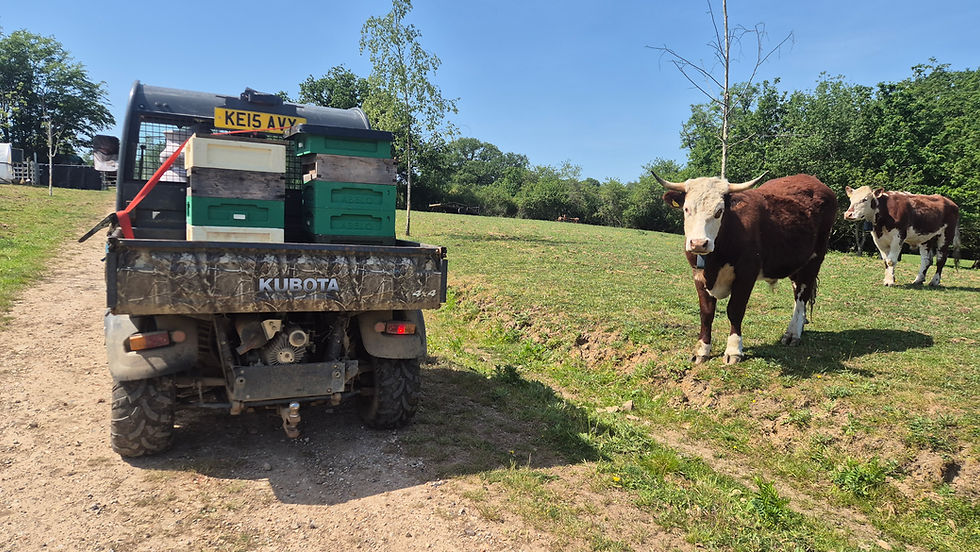
This is where the beekeeper's year quietly pivots from "watch the bees go mad" to "do some actual admin." Broadly: Harvest, but don't be greedy. Now's the moment most local beekeepers pull the supers — the honey boxes — once they're capped and the scales (or a good old-fashioned heft) confirm the flow has genuinely stopped rather than just paused for a rainy week. The golden rule is to leave the bees enough of their own honey to get through winter; the surplus, not the lot, is what goes in the jar.
Tighten up the defences. With robbing risk rising, entrances often get reduced to something more easily guarded, and beekeepers keep half an eye out for wasps trying their luck.
Start thinking about winter, even though it's still warm. Varroa mite treatment typically goes on once the honey's off, since you don't want chemicals anywhere near anything destined for toast. It's also queen-assessment season — deciding which colonies are thriving and worth keeping queens from, and which might benefit from a change of leadership before autumn.
Have a cup of tea. Genuinely — most calendars for this point in the year describe the workload as dropping right off. The frantic swarm-chasing of May and June is done, harvest is a satisfying one-off task rather than a daily fire drill, and there's a brief window to actually enjoy the apiary rather than wrestle with it.
So if you spot a few less hurried bees nosing around the last of the bramble flowers in the next week or two, that's the sound of a season winding down rather than ending — and somewhere nearby, a Hadley Wood beekeeper is probably enjoying their first slow afternoon in months, sticky jars lined up on the kitchen counter as proof of the lime trees' brief, boozy generosity.


Comments